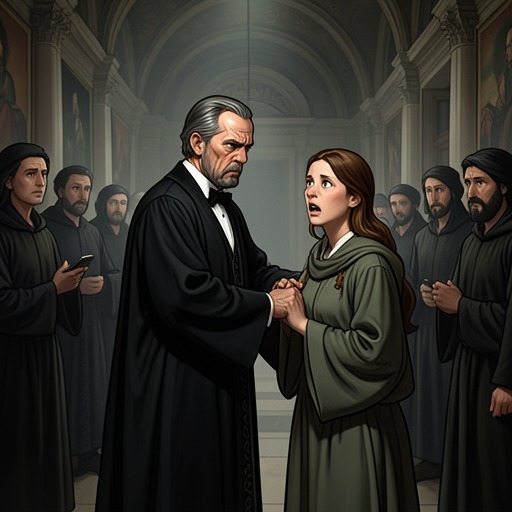
YeLu ZongZhen
Demi-Gods and Semi-DevilsYeLu ZongZhen, remembered in Liao history as the Prosperous Emperor, was the elder son of YeLu LongXu and the brother of YeLu ZhongYuan. His succession established a consequential precedent: although ZhongYuan had once been recognized as the next heir after supporting his brother, YeLu ZongZhen’s own throne passed instead to his son YeLu HongJi. The resulting tension between family loyalty, imperial designation, and inherited expectation forms part of the political background to the rebellion narrated later in the book.
Identity and dynastic background
YeLu ZongZhen was the eldest son of YeLu LongXu, the ruler remembered as the Holy Emperor; his younger brother was YeLu ZhongYuan. The historical account contrasts the brothers’ characters: YeLu ZongZhen was kind and generous, while ZhongYuan was valiant and gifted in military strategy. Their different qualities matter to the succession history because the question of who should rule was not settled by birth order alone.
As YeLu LongXu approached death, he designated YeLu ZongZhen to succeed him. The empress, however, favored her second son and schemed to place ZhongYuan on the throne. The account explains that the empress dowager held exceptional power in Liao, leaving YeLu ZongZhen unable to consolidate his authority fully and in danger even after becoming emperor.
ZhongYuan’s support and the succession precedent
YeLu ZongZhen learned of his mother’s plan and informed ZhongYuan. Rather than accept the opportunity to become emperor with the empress’s help, ZhongYuan supported his elder brother, thwarting the scheme. YeLu ZongZhen responded with gratitude: he granted ZhongYuan the rank of royal emperor brother and made him next in line to succeed the throne. ZhongYuan’s choice was presented as an act of loyalty, and he kept the episode quiet.
That arrangement did not determine the next succession. After YeLu ZongZhen died, the throne went to his son YeLu HongJi, not to ZhongYuan, although ZhongYuan had been named heir apparent. The account thus distinguishes an earlier promise of succession from the later transfer of the crown through the emperor’s own line.
Legacy in the crisis under YeLu HongJi
Once on the throne, YeLu HongJi sought to compensate ZhongYuan for being passed over. He elevated his uncle to the rank of royal emperor uncle, again placing him next in line, and made him supreme commander of the army. The honors also included exemption from kneeling in court, gold, scriptures, a mortar board, and a two-colour robe. ZhongYuan consequently became one of the most powerful figures in the empire. YeLu HongJi also made ZhongYuan’s son YeLu NieLuGu Prince of Chu and gave him control of military affairs in the Southern Chancellery.
The arrangement created a powerful military and dynastic bloc around the uncle and his son, even though ZhongYuan had earlier demonstrated loyalty by refusing the throne. When YeLu HongJi was away hunting, he entrusted military affairs to ZhongYuan without suspicion. The rebellion that followed was led by YeLu NieLuGu, while the emperor feared that his uncle might support his son. The earlier succession history therefore gives the later crisis its particular force: YeLu ZongZhen’s decision to honor his brother did not prevent his own son from inheriting the throne, and YeLu HongJi’s subsequent efforts to repay and empower ZhongYuan placed the succession question and military command in the same family’s hands.
Narrative significance
YeLu ZongZhen appears through a historical account recounted during the rebellion, not as an active participant in the present action. His brief reign links two transfers of power: the Holy Emperor’s designation of him over ZhongYuan, and the later passage of his own throne to YeLu HongJi rather than to his previously named heir. That history complicates any simple reading of the rebellion as a sudden personal betrayal. The crisis grows from layered imperial accommodations—loyalty rewarded with rank, an heir passed over, and military authority entrusted to close relatives—whose consequences outlast YeLu Zongzhen himself.